

Our History
The Northwest Works District sits on land shaped by industrial vision, resilience, and economic ambition. From a deep-water seaport engine to Portland's premier manufacturing center, our footprint continues to drive Oregon's industrial future under the administrative guidance of the Columbia Corridor Association (CCA).
"The hordes of awestruck visitors who admired the scenery at the 1905 Lewis and Clark Exposition would have been shocked if they'd known the beautiful little lake would be gone in 20 years—filled in for industrial lands. Not a trace remains."
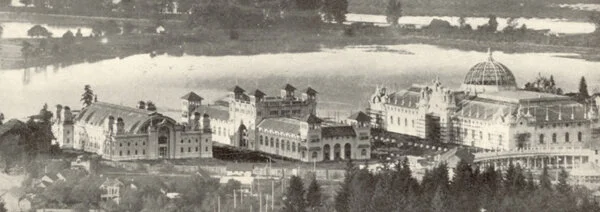
The Guild's Lake Era
Originally a flood-prone lowland near the confluence of Balch Creek and the Willamette River, the lake took its name from Peter Guild, an early settler who owned nearly 600 acres. Following his passing, visionary landowners modified the geography to build early sawmills, railroads, shipping docks, and deep-water terminal points that anchored Portland's potential as a global commercial seaport.
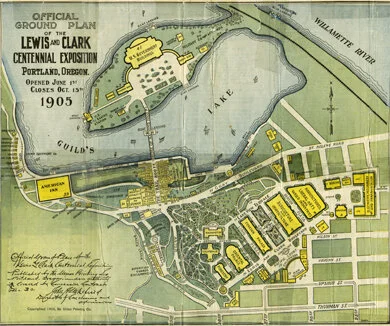
The Centennial Exposition
In 1905, the world's eyes turned to this footprint for the legendary Lewis and Clark Centennial Exposition, hosted on a spectacular artificial island built within Guild's Lake. This massive cultural and economic showcase permanently proved the structural feasibility and premium geographic value of the district to regional developers.
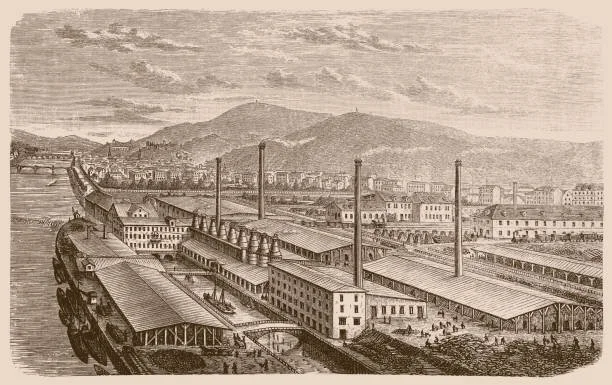
The Industrial Transformation
Following the exposition, engineering initiatives filled the shallow lake bed with gravel from the Balch Creek watershed, transforming mudflats into solid commercial foundations. By completion of a major port terminal in 1914, it became Portland's most important industrial zone. During WWII, the area expanded rapidly to provide temporary housing arrays and strategic support infrastructure for shipyard crews.

The Sanctuary Protection
In 2001, the Portland City Council formally adopted the Guild's Lake Industrial Sanctuary Plan to secure and legally protect the area's long-term economic viability. Today, we’re keeping that tradition alive. Metal shops, logistics companies, creative studios—they all work side-by-side here, just like they always have.